



 Impact
 Initiatives
 Dashboard
 Alliances

 Impact
 Initiatives
 Dashboard
 Alliances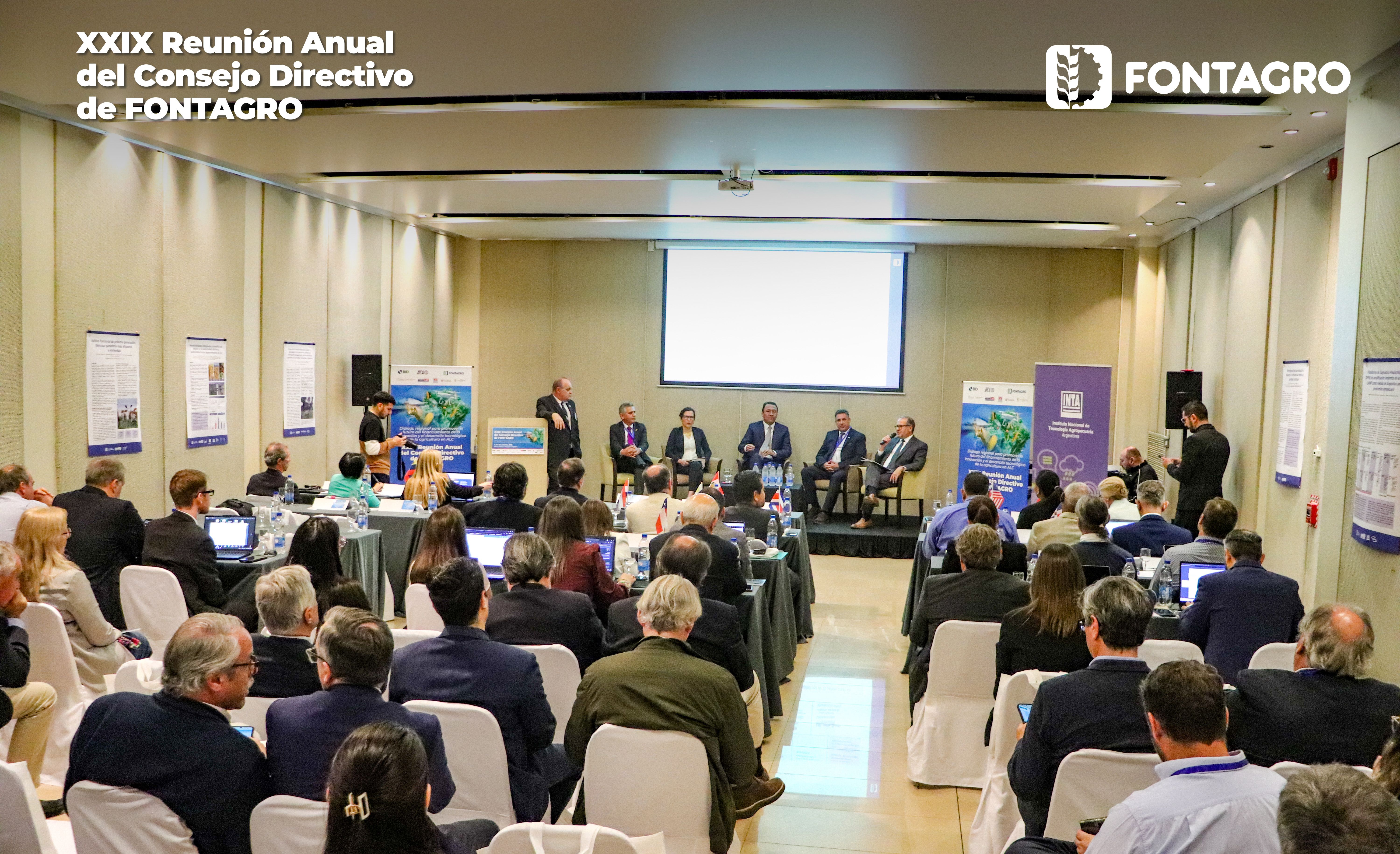
On October 7th, the Regional Dialogue on the Future of Financing for Innovation and Technological Development in Agriculture of Latin America and the Caribbean took place, organized by FONTAGRO in collaboration with INTA of Argentina and the ArgenINTA Foundation. The event was held in the city of Rosario, Santa Fe, Argentina, becoming the continental epicenter of the exchange on agricultural innovation and strategies for financing in science and technology.
The event brought together directors of national research and agricultural innovation institutes from the 15 member countries of FONTAGRO and prominent representatives from funding and multilateral cooperation agencies, such as the Inter-American Development Bank (IDB), the World Bank Group, the Inter-American Institute for Cooperation on Agriculture (IICA), the Presidency of SENASA, scientists from the University of Florida, Bayer AG, the Global Research Alliance on Agricultural Greenhouse Gases (GRA), Moolec Science, CONICET, among other companies in the Argentine agribusiness sector.
The opening ceremony featured remarks from distinguished authorities and institutional representatives such as Ángel Manero Campos, Minister of Agrarian Development and Irrigation of Peru, and Martín Gustavo Giaccio, Undersecretary of Regional Economies and Small and Medium Producers of Argentina, who emphasized the importance of promoting regional alliances to strengthen sustainable agricultural development, alongside the Presidency of INTA Argentina and INIA of Peru.
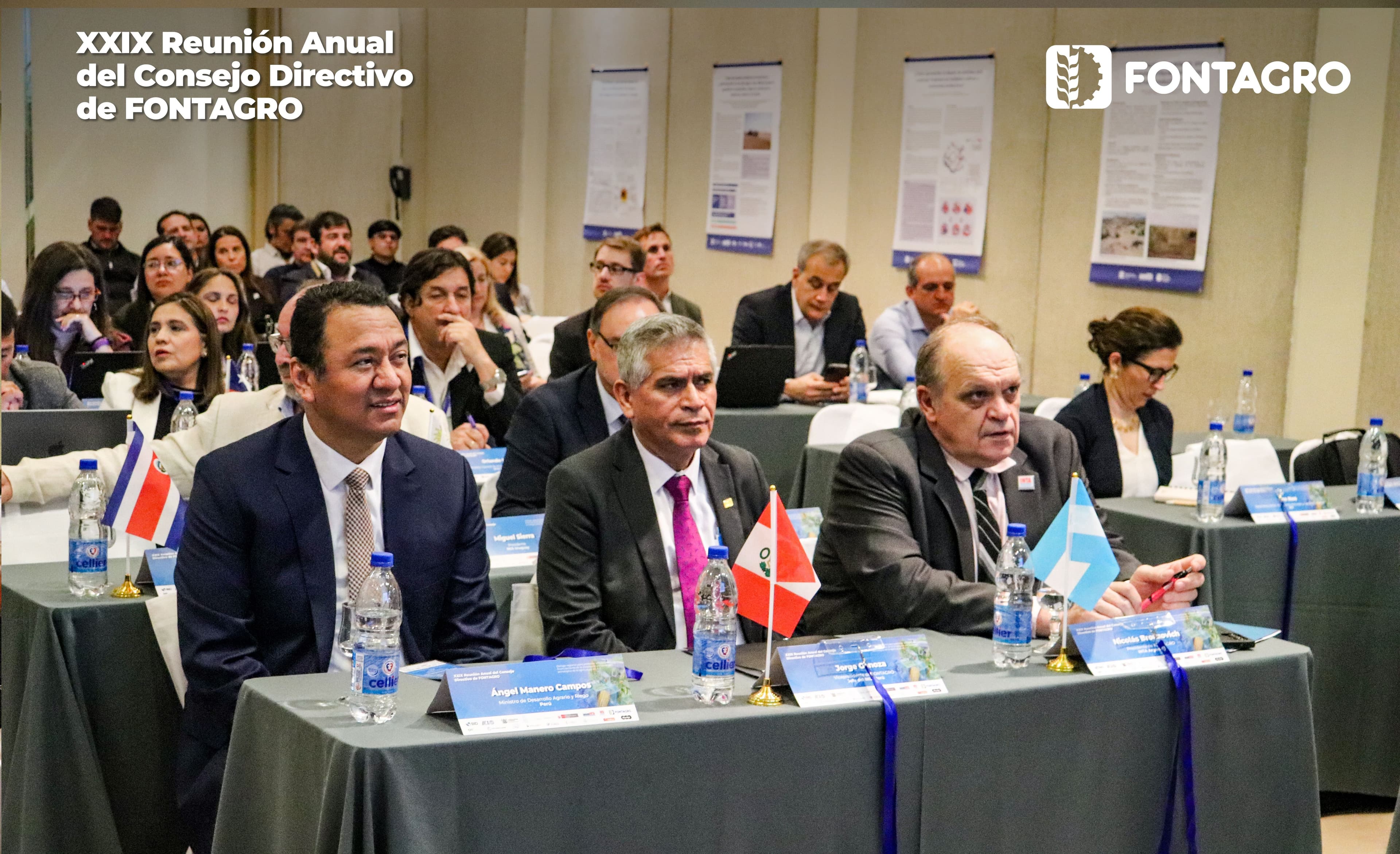
Three panels fostered dialogue between countries and between public-private institutions. Panel 1: "Driving the Future of Agriculture in the Region" highlighted the importance of facilitating the transfer and adoption of technologies, as well as creating flexible financing frameworks that allow investments to adapt to the realities of each territory. The importance of building consensus among public and private actors and integrating collaborative projects to maximize impact on production systems was emphasized.
Panel 2: "Innovation and Technological Transformation for the Agriculture of the Future" presented the importance of biotechnology, digitalization, and artificial intelligence in increasing the competitiveness of productive chains, and there was agreement on the need to strengthen institutional capacities to take advantage of these opportunities. There was a discussion on the importance of regulatory frameworks that accompany responsible innovation and access to these technologies, so that farmers can benefit from them more quickly.
Finally, Panel 3: "Financing Agricultural Innovation – New Pathways for Latin America and the Caribbean" underscored the importance of developing public-private investment schemes, innovative financial instruments, and strategies to diversify risks and accelerate the adoption of high-impact technological solutions. In addition, the importance of having governance frameworks to effectively channel financing towards strategic and sustainable projects was highlighted.
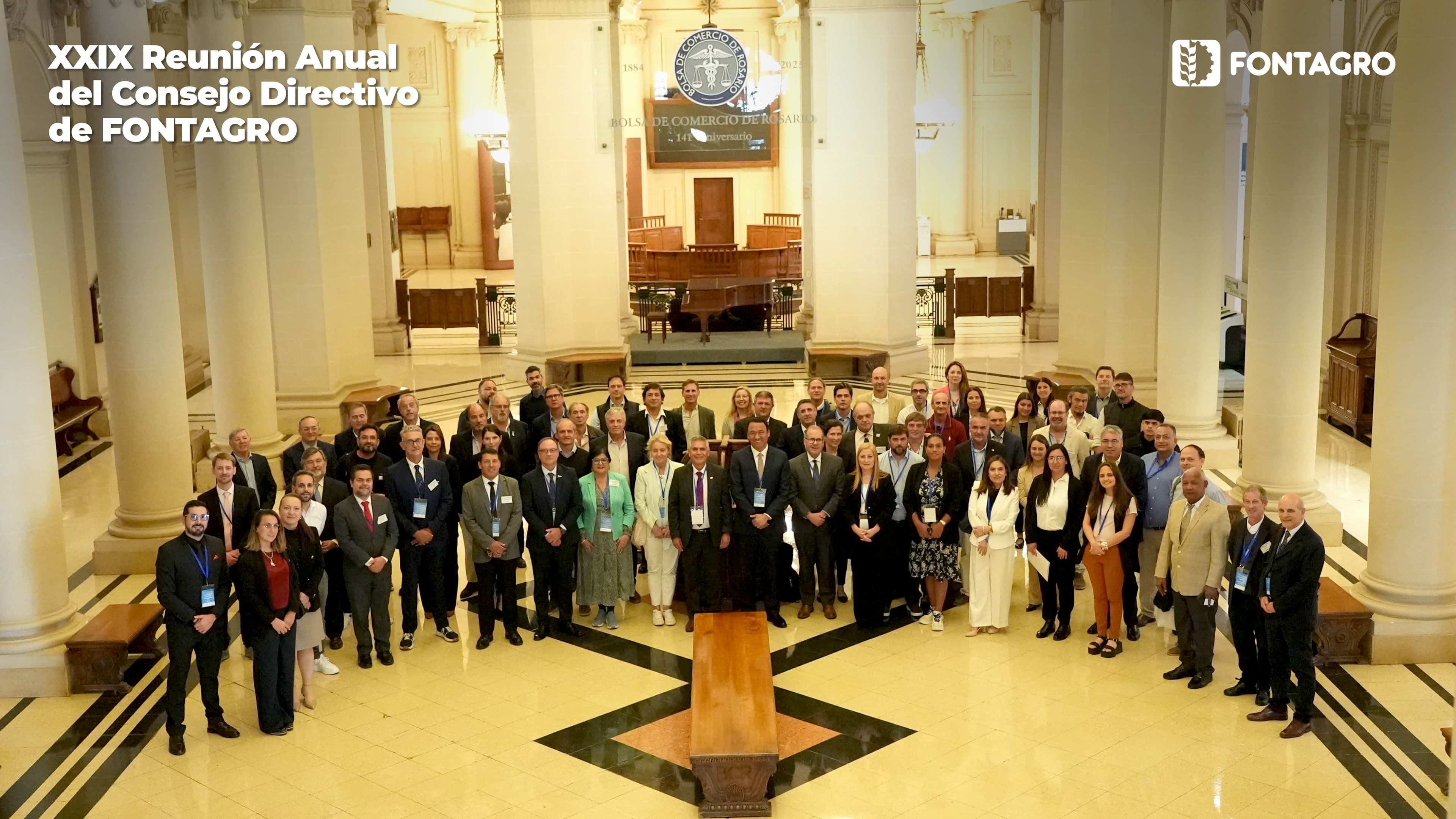
Additionally, participants visited the Rosario Stock Exchange, where they were able to gain in-depth knowledge of the Agro-exporting Pole of Greater Rosario, a key axis for the agricultural and commercial development of the country. This experience allowed attendees to understand the operation of one of the main financial centers for grains and its influence on the regional economy.
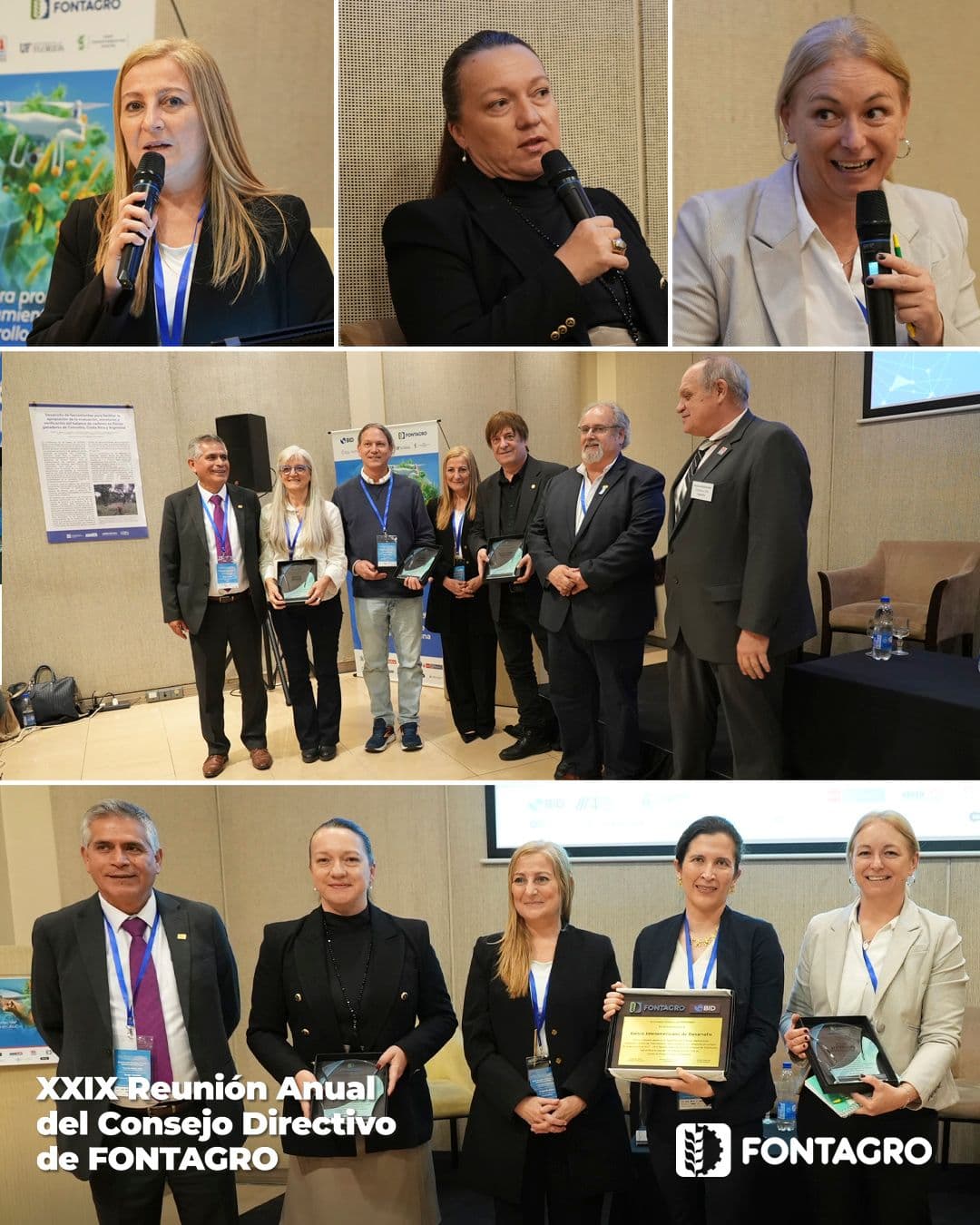
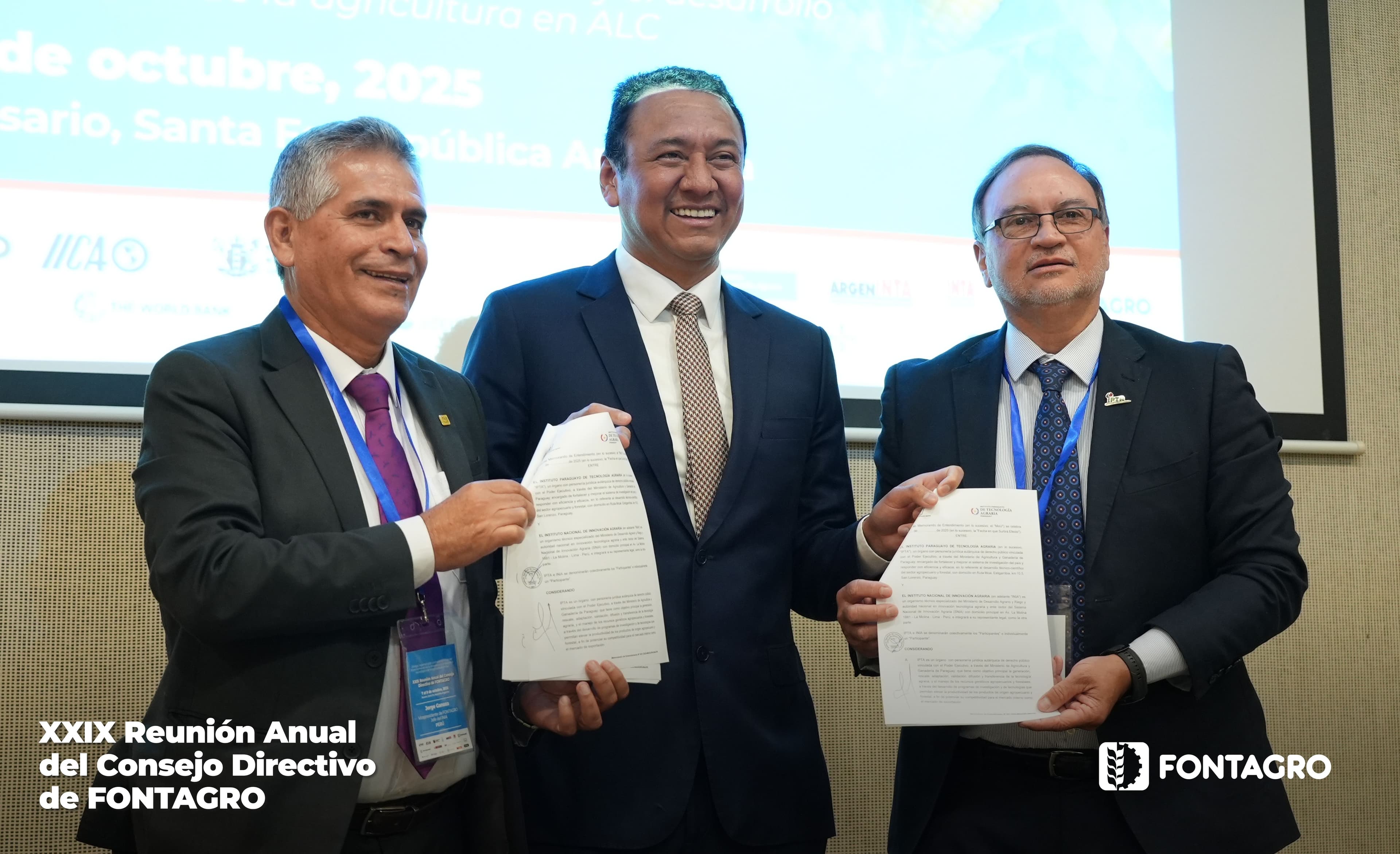
Moreover, within the framework of the dialogue, a Technical-Scientific Collaboration Agreement was signed between representatives of INIA (National Institute of Agricultural Innovation of Peru) and IPTA (Paraguayan Institute of Agricultural Technology). The agreement will facilitate the exchange of germplasm, the development of joint research, and the strengthening of technical capacities to promote agricultural development in both countries.
The event concluded by emphasizing the need to continue working in synergy to transform agriculture in Latin America and the Caribbean, betting on innovation, strategic financing, and the exchange of knowledge for the benefit of the entire region.
FONTAGRO is a strategic investment and co-financing fund, created by the finance ministers of its member countries, and is unique of its kind worldwide. Its mission is to facilitate strategic partnerships and multi-country, multi-actor, and multidisciplinary networks to promote sustainable financing for agricultural research, development, and innovation (R&D&I). Additionally, it acts as a reference forum in technological innovation, promoting regional dialogue to increase the competitiveness of the agri-food sector, reduce poverty, and encourage the sustainable use of natural resources. Over the past 27 years, 212 regional agricultural innovation laboratories have been co-financed for an amount of over USD $150 million, reaching 2,000 organizations and 300,000 beneficiaries.
The National Institute of Agricultural Technology (INTA) is a public organization under the Secretariat of Agriculture, Livestock, and Fisheries of the Argentine Republic. Created in 1956, its goals and efforts are geared toward innovation as a driver of national development. As an integral part of the National System of Science, Technology, and Innovation, it develops capacities for the agribusiness sector and participates in networks that promote inter-institutional cooperation; it generates knowledge and technologies that it puts at the service of various sectors of society through its systems of extension, information, and communication.
About the ArgenINTA Foundation:
Created at the initiative of the National Institute of Agricultural Technology (INTA) in July 1993, aimed at developing an institutional space that stimulates and facilitates public-private relationships and the mobilization of resources around initiatives and projects. The ArgenINTA Foundation has extensive experience in managing and executing International Projects working alongside public and private organizations, promoting the commitment to a more sustainable future, addressing issues of climate change, carbon sequestration, animal welfare and health, artificial intelligence, value chains, bioeconomy, family farming, among others.