• Go to Fontagro's X profile
  • Go to Fontagro's Instagram profile
  • Go to Fontagro's Linkedin profile
  • Go to Fontagro's Youtube profile
  • About Us
  • Governance
    • Governance
    • Our committees
  • Documents
  • News
    • News
    • Events
  • Library
  • Toolkit
Fontagro
  • Menu iconImpact
    • Projects
    • Success Cases
    • Impact Stories
  • Menu iconInitiatives
  • Menu iconDashboard
  • Menu iconAlliances
  • Go to Fontagro's X profile
  • Go to Fontagro's Instagram profile
  • Go to Fontagro's Linkedin profile
  • Go to Fontagro's Youtube profile
Fontagro
Fontagro
  • About Us
  • Governance
    • Governance
    • Our committees
  • Documents
  • News
    • News
    • Events
  • Library
  • Toolkit
  • Menu iconImpact
    • Projects
    • Success Cases
    • Impact Stories
  • Menu iconInitiatives
  • Menu iconDashboard
  • Menu iconAlliances
Fontagro

Innovation ecosystem for the agri-food sector in Latin America and the Caribbean

Newsletter
  • Impact
  • Initiatives
  • Dashboard
  • Alliances
  • About Us
  • Governance
  • Documents
  • News
  • Library
  • Toolkit

Contact Us

  • E-mailfontagro@iica.int
  • LocationIICA USA - 1889 F Street, N.W., Suite 360 Washington, D.C. 20006
  • Terms, conditions and privacy policy

© 2026 Fontagro. All Rights Reserved

  • Go to Fontagro's X profile
  • Go to Fontagro's Instagram profile
  • Go to Fontagro's Linkedin profile
  • Go to Fontagro's Youtube profile
impact story image
View project

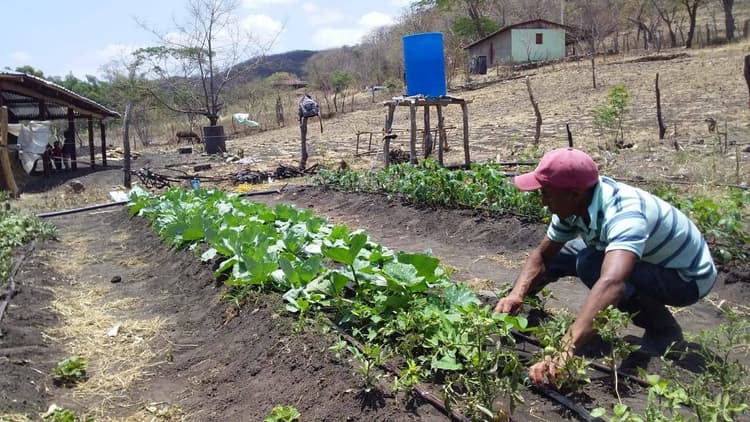
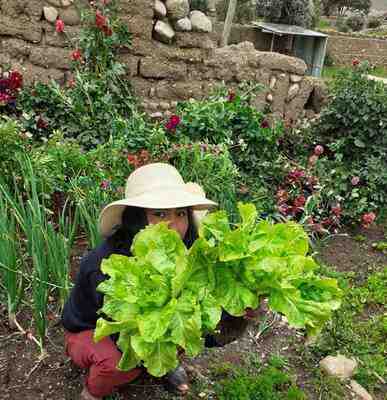
Andean schoolchildren prepare to face climate change and improve family farming.

Disseminate, through a participatory scaling methodology based on a Virtual Dissemination Platform (VDP), knowledge and climate-resilient technological innovations that enhance the family production systems of the Peruvian-Bolivian Altiplano

X iconFacebook iconLinkedin icon
Summary icon

Context of the story

Andean family farming faces a scenario of climate change and needs to intensify its productivity in a sustainable manner. In the family nucleus, young people are key elements. However, they are not considered in technology transfer. It is planned to reach this segment by disseminating locally validated agricultural knowledge obtained through research. A methodology for scaling up Agricultural Technological Alternatives (ATAs) has been followed using, as a tool, a virtual dissemination platform (VDP). This tool has been operational for 42 months. Through its monitoring system, it is observed that the beneficiaries (women and men) have strengthened their knowledge in preparation for their future role as “new farmers”.
Summary icon

How is Technical Cooperation structured?

The Implemented Initiative

The Project has been structured with three components: a) development of a methodological process that includes convening stakeholders, definition of beneficiaries (rural students), a baseline study and a systematization of agricultural technological alternatives (ATAs); b) develop a Virtual Dissemination Platform (VDP) where ATAs are included and that allows beneficiaries to access this knowledge virtually, with support from workshops (participatory/virtual) and demonstrative modules, and c) create conditions for continuity with local stakeholders. The central focus, disseminating ATAs, enabled students to install several of them in their properties as a replica of what they learned when interacting with the VDP. This confirms the scaling process is functioning correctly.
Inititiative image
Inititiative image
Inititiative image
Inititiative image
Inititiative image
Inititiative image
Inititiative image
Inititiative image
Inititiative image
Inititiative image
Inititiative image
Inititiative image
Inititiative image
Inititiative image
Inititiative image
Inititiative image
Inititiative image
Summary icon
VIRTUAL PLATFORM AS A DISSEMINATION TOOL (VDP)

The technological solution

The orientation of the CT is to strengthen Andean agriculture in a context of poverty, environmental fragility, climatic irregularity, and socioeconomic restrictions. The target group is rural students of both sexes from the Peruvian-Bolivian Altiplano. This segment is not a priority in existing technology transfer programs. Therefore, the initiative considers that this young population needs knowledge, guidance, and agricultural skills because in the future they will be responsible for productive units. The strategy is based on disseminating validated and climate-resilient agricultural technology alternatives (ATAs) through a Virtual Dissemination Platform (VDP). The VDP includes 60 ATAs in areas of agriculture, livestock, processing, among others, which have been locally validated and are consistent with the Andean family production system. It is hoped that the new farmers and innovators will be the ones who strengthen local agriculture and become leaders in transferring knowledge.
Quote background
"“As a user of the VDP, in 2019, I downloaded the earthworm ATA. Now, in 2021, with my parents, we raise more worms, we produce three compost crops a year and I continue to teach my classmates so they can do the same”"
— Andrea Maribel Mayta Callisaya student
Loading map...

Type of project

Agronomic PracticesAgronomic PracticesGenetic ResourcesGenetic ResourcesTechnological-Organizational-InstitutionalTechnological-Organizational-Institutional
Summary icon

Results

There are five levels of actors. Students are the “focus of interest”. 33 agreements were signed. In 2018, a survey was taken of 943 students and repeated in 2021 with 688. In 2018, 10% talked to their parents about technology. In 2021, 70% did. The agricultural ATAs were rated as "good" (54%) and "very good" (40%). In 2021, 98% want to install ATAs in their properties. The VDP recorded 21,596 visits. Of these, 945 users interacted 3,680 times. From the VDP, 25 ATAs were downloaded in 1,978 opportunities. 111 replicas were installed in homes. 98 teachers use the VDP as an educational reference. The face-to-face workshops registered 2,678 students in 80 events. The 46 virtual workshops had a total of 1,011 students. Following the virtual workshops, the correct answer rate was 76%. 369 students participated in the Modules. In the “native potatoes” contest, 68 students participated. They recovered 18 potato varieties from being lost.
Summary icon

Relevant data

SCALING UP OF AGRICULTURAL TECHNOLOGICAL ALTERNATIVES THROUGH PVD

Agreements with rural schools
33
Agreements with rural schools
Technological alternatives
60
Technological alternatives
Trained Women
480
Trained Women
 Schoolchildren PVD users
945
Schoolchildren PVD users
ATA's downloaded
1979
ATA's downloaded
Platform Visits
21596
Platform Visits
Video preview
Ampliación del criadero de lombrices para la producción de humus. Réplica en su hogar por las hermanas Mayta Calliasaya, con apoyo de sus padres. Pillapi, La Paz-Bolivia.
Identificación de actividades productivas agrícolas, ganaderas y de transformación de alimentos (Derivados lácteos), por padres de familia y la dirección del colegio en la Comunidad de Pillapi (Tiahuanacu, La Paz-Bolivia).
Autoridad originaria (Mallku), del Municipio de Tiahuanacu, en la cosecha de papa nativa, Alternativa Tecnológica Agropecuaria (ATA), disponible en la Plataforma Virtual de Diseminación (PVD)
Costura de agrofilm para techado de la carpa solar del colegio, por parte de profesores, estudiantes y padres de familia
Preparación de camellones por estudiantes, profesores y padres de familia (Junta Escolar), para siembra directa o trasplante de hortalizas en el componente agrícola de producción de hortalizas en carpas solares en el Módulo Demostrativo de Pillapi (La
Siembra de variedades de papa nativa por la Junta Escolar, como parte de las actividades agrícolas del fondo rotatorio de semilla de papa
Las hermanas Mayta Callisaya en Pillapi (La Paz-Bolivia), en la réplica de cría de lombrices para la producción de humus
Reunión con los padres de familia en la que se informa y planifica las actividades productivas relacionadas con el marco lógico del proyecto: “Intensificación de la Agricultura Familiar en Perú y Bolivia”
Presentación del proyecto a las máximas autoridades de la región (Alcalde, Consejos municipales). Socializar sus objetivos, alcances, beneficiarios y resultados a conseguir durante su ejecución.
Parcela demostrativa de papa nativa. Preparación de la siembra de tres variedades de papa nativa (Var. Saq´ampaya, Imilla negra y Jancko phiño); identificadas con altos contenidos de Hierro y Zinc.
En la siembra y trasplante se promueve el uso de Biol; que es un abono foliar de producción casera, que contiene nutrientes y hormonas de crecimiento a partir de un proceso de descomposición de los desechos orgánicos animal y vegetal.
Cosecha de plantas marcadas, durante el desarrollo de la técnica de selección positiva, que sirve para mejorar la calidad de la semilla de papa y mejorar el rendimiento.
Después de la cosecha de papa, se seleccionan los tubérculos en función de: Sanidad (sin gusanos ni pudriciones), aspecto físico (sin cortes o rajaduras), uniformidad varietal (Sin mezclar otras variedades).
Identificación de variedades de papa nativa de acuerdo a preferencias culinarias, gastronómicas, usos y costumbres y por la conservación de la biodiversidad existente en la región (Comunidades circundantes al lago Titicaca de Perú y Bolivia).
Primer taller de avance, seguimiento y evaluación del proyecto, para socializar su ejecución con el uso de la PVD y analizar los aspectos técnicos. Participaron 30 mujeres y 32 varones, entre estudiantes, profesores, padres de familia y técnicos.
Sesión presencial para la revisión y descarga de la tecnología “Cría de lombrices y producción de humus”, con estudiantes del colegio Mcal. Andrés de Santa Cruz que identificó la tecnología para su réplica en los predios del colegio.
Marcación de selección positiva en papa; realizada en la floración del cultivo con el propósito de mejorar la calidad de la semilla y tener una mejor producción. Se promueve su uso para reutilizar la semilla y fortalecer las capacidades locales.
Una vez que el cultivo ha cumplido su ciclo se organiza la cosecha, actividad que involucra la participación de varones, mujeres y niños.
“Apthapi”, costumbre ancestral que consiste en degustar entre todos los miembros de la comunidad una merienda con productos cultivados en la región, como papa, oca, quinua, izaño y otros.
Alternativa tecnológica para conservación de forraje como ensilado de manera artesanal Puno Perú
Acuerdo de trabajo con Instituciones Educativas Puno Perú CIRNMA FONTAGRO
Acceso a la Plataforma Virtual de Diseminación - PVD, CIRNMA FONTAGRO
Capacitación  a estudiantes semipresencial crianza de lumbricultura y producción de humus para la agricultura Puno Perú, CIRNMA FONTAGRO
Entrega de lombriz californiana a estudiantes de IESTP Cabanillas para crianza y producción de humus en predio de sus padres Puno Perú CIRNMA FONTAGRO
Alternativa Tecnológica Transformación del grano de quinua en néctar de quinua Puno Perú CIRNMA FONTAGRO
Invernaderos rústicos a 4100 msnm

Participating Organizations

 - Perú

Perú

 - Bolivia

Bolivia

Main Donors

 - undefined

Other Impact Stories

The Tangible Impact of Science and Technology in the Field

Story image
Agroecological model for avian coccidiosis
Story image
Innovations for reducing methane emissions in ruminants
Story image
Adaptation to climate change: silvopastoral systems in Central America

Project information

Learn moreProject technical specificationsProject News
No povertyGender equalityDecent work and economic growthReduced inequalitiesResponsible consumption and production
No poverty
Gender equality
Decent work and economic growth
Reduced inequalities
Responsible consumption and production